
Carter & Son 1/2" Spindle Gouge Review:

The Tool That Made Turning Feel More Like a Craft
Category: In the Shop
Brand: Carter & Son Toolworks
Tool: 1/2" Spindle Gouge with 12" Aluminum Handle
Disclosure: Purchased independently. No compensation was received for this article.
After years of using carbide tools for quick shaping, the Carter & Son 1/2" Spindle Gouge became the tool that helped me slow down, refine the cut, and start treating spindle turning less like shaping material and more like learning a craft.
A field note on Carter & Son, spindle turning, and moving beyond carbide tools
I came into woodworking through the lathe.
Before I cared much about table saws, joinery, cabinet parts, or shop layouts, I took a short pen-turning class and fell for the process almost immediately. There was something about it that felt closer to a pottery wheel than traditional woodworking: the blank spinning in front of you, the shape appearing under your hands, and tiny changes in pressure, angle, and confidence changing the piece in real time.
I was hooked.
From there, I started making Christmas ornaments and small decorations, and over time I kept finding excuses to return to spindle work. Bowls and cups are beautiful, but the projects that kept pulling me back were handles, ornaments, wands, decorative forms, and small turned objects with character.
That is part of why the Carter & Son 1/2" Spindle Gouge with a 12" handle appealed to me. At the time, most of my turning experience was built around interchangeable carbide tools. They are useful, approachable, and honestly a great way to get started. But eventually I wanted to move beyond scraping my way toward a shape and start learning the kind of control that makes turning feel more like a craft.
I first heard about Carter & Son through a Stumpy Nubs video, then found myself looking through their tools and immediately understanding the appeal. They looked premium without feeling ridiculous, the interchangeable handle system made practical sense, and the whole thing had the feeling of a tool made by people who cared about the details.
I bought the gouge in September 2021. It was one of my first real steps away from carbide turning tools and toward something that demanded more from me, but also promised more in return.
The family behind the steel
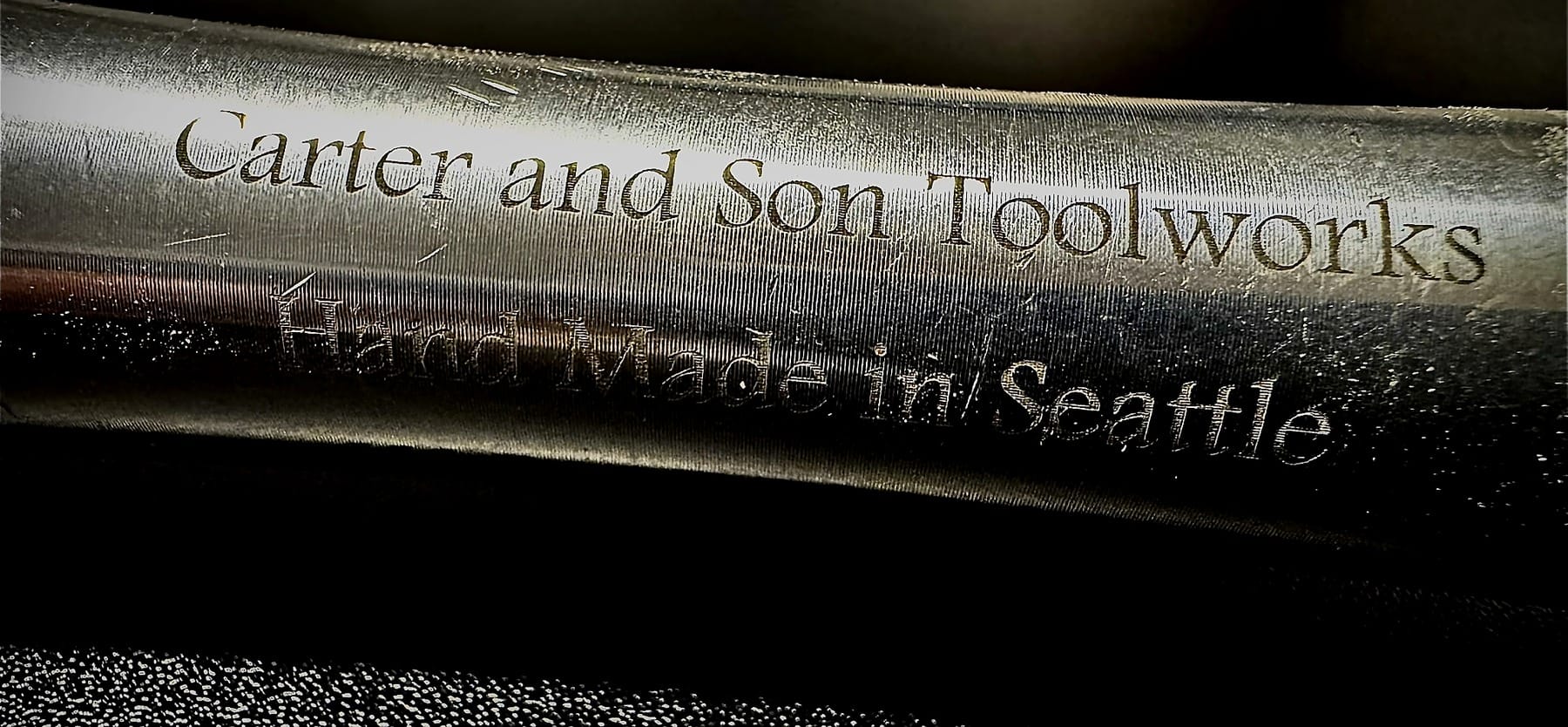
Carter & Son Toolworks is based in Seattle, and their story matters because it explains why the tool feels the way it does.
The Carter family has been in manufacturing for more than 40 years. Paul Carter came to woodturning and, like a lot of serious turners, found himself frustrated with the quality and feel of the tools available to him. His father, David Carter, brought a lifetime of metallurgical experience to the problem, and the company built its turning tools around M42 high-speed steel.
That detail is not just brochure noise. Carter & Son uses M42 high-speed steel with 10% cobalt, a combination chosen for edge holding and wear resistance. Their tools are also built around a few consistent design choices: round tangs, hand-polished flutes, factory-sharp grinds, and balanced aluminum handles.
This is the part I appreciate. Carter & Son does not feel like a company that started with a cheap tool and dressed it up with a better handle. The design language runs through the whole tool: the steel, the grind, the polish, the tang, the handle, and the way the system is meant to grow over time.
That does not automatically make it the right tool for every turner. But it does make the tool feel intentional.
First impressions
The first thing I noticed was the weight.
Not heavy in a clumsy or uncomfortable way. Heavy in the way a quality tool often is: dense, stable, and deliberate. The aluminum handle gave the gouge a sense of control before I even put it to wood. It felt less like a starter accessory and more like something meant to stay in the shop for a long time.
It also arrived very sharp.
That matters with a tool like this, especially when you are still learning traditional turning technique. A sharp tool gives cleaner feedback. It makes it easier to tell when your presentation is wrong, when your bevel contact is off, or when you are simply asking the tool to do something it does not want to do.
What has surprised me most is how well it has retained that edge. I still do not have my traditional turning-tool sharpening setup as dialed in as I want it, which makes edge retention more than a spec-sheet detail. For me, it has been the difference between a tool I keep reaching for and a tool that would sit there quietly accusing me of not sharpening it properly.
That is the thing about sharp tools: they remove excuses. A dull tool makes every bad cut ambiguous. A sharp one tells the truth.
How I actually use it
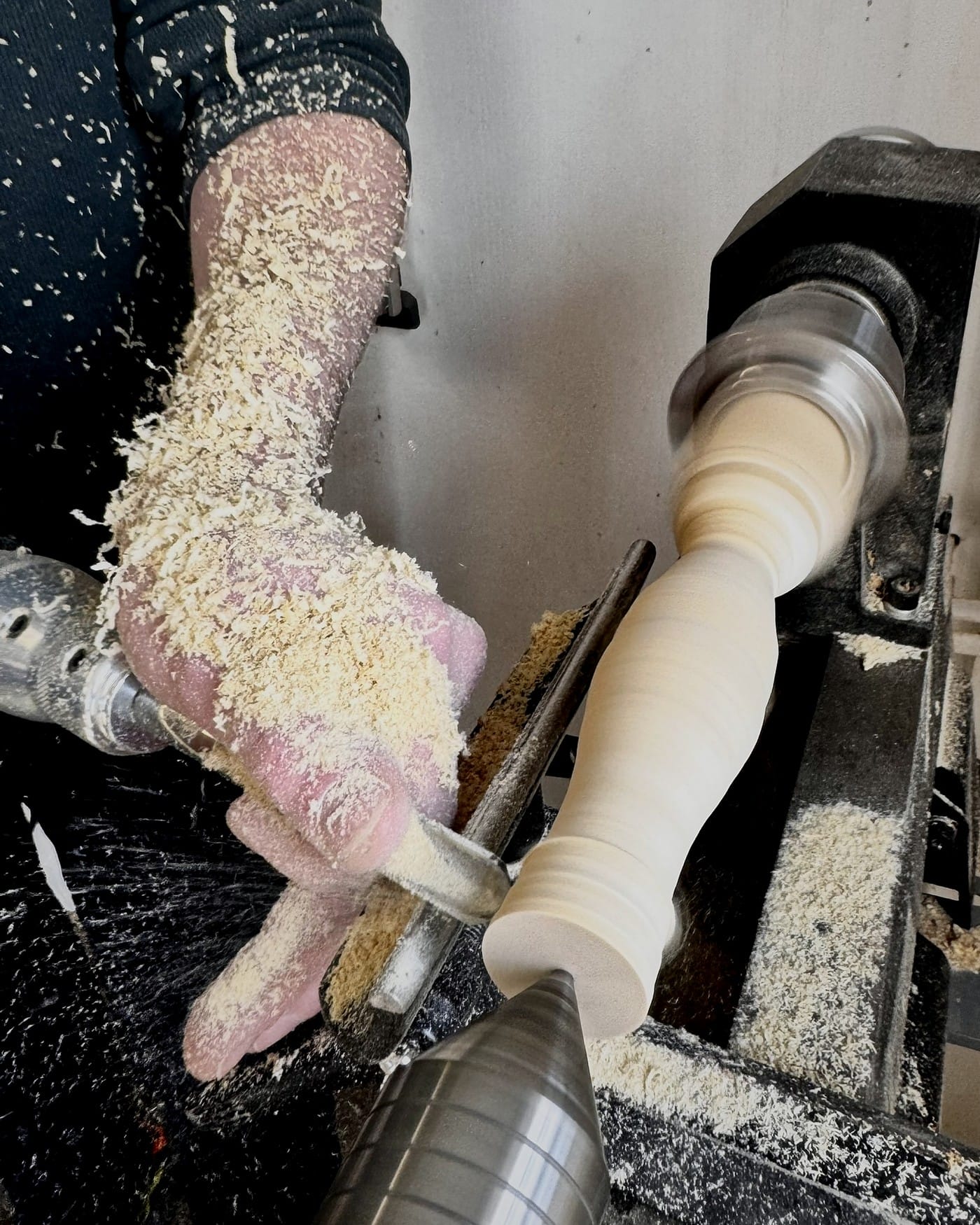
I do not use the Carter & Son as my only turning tool.
Most of the time, I still rough out forms with carbide tools. That is partly habit and partly practicality. Carbide tools are fast, simple, and forgiving when I am just trying to get a blank into a basic shape.
But once the rough form is there, I reach for the Carter & Son.
I still rough with carbide, but I reach for the Carter & Son when the shape starts to matter.
That is the best way I can describe its role in my shop. It is the tool I use when I want to refine a curve, soften a transition, clean up a profile, or give a spindle more character. I have used it on ornaments, Christmas decorations, small birdhouse forms, practice spindles, and now magic wands.
That kind of work is why I like spindle turning in the first place. A tiny change in curve can change the whole personality of the piece. A wand can go from clunky to elegant. An ornament can go from plain to intentional. A small decorative detail can make the object feel handmade in the best possible way.
The Carter & Son does not magically make those decisions for me. It does something better: it makes me want to get better at making them.
Why the steel matters at the lathe
I am not going to pretend I can verify every metallurgical claim in a controlled lab. I cannot. I am a woodworker using the tool in a real shop, not a testing facility measuring edge degradation under a microscope.
But in normal use, the edge retention is the thing I keep coming back to.
The tool leaves the sharpening station, goes to the lathe, and stays useful longer than I expect. It gives me more time in the actual cut and less time interrupting the rhythm of a turning session. When I am working on small spindle forms, that matters. The whole joy of the lathe is momentum: cut, check the curve, refine, adjust, keep going. Every trip back to the grinder breaks that spell a little.
The gouge also rewards cleaner technique. When I get the bevel riding properly and let the tool cut instead of forcing it, the surface off the tool is noticeably better than what I get when I am lazily scraping my way through a shape.
That is not magic. That is the difference between a tool that rewards good habits and one that lets you get away with bad ones.
The handle system is more useful than it sounds
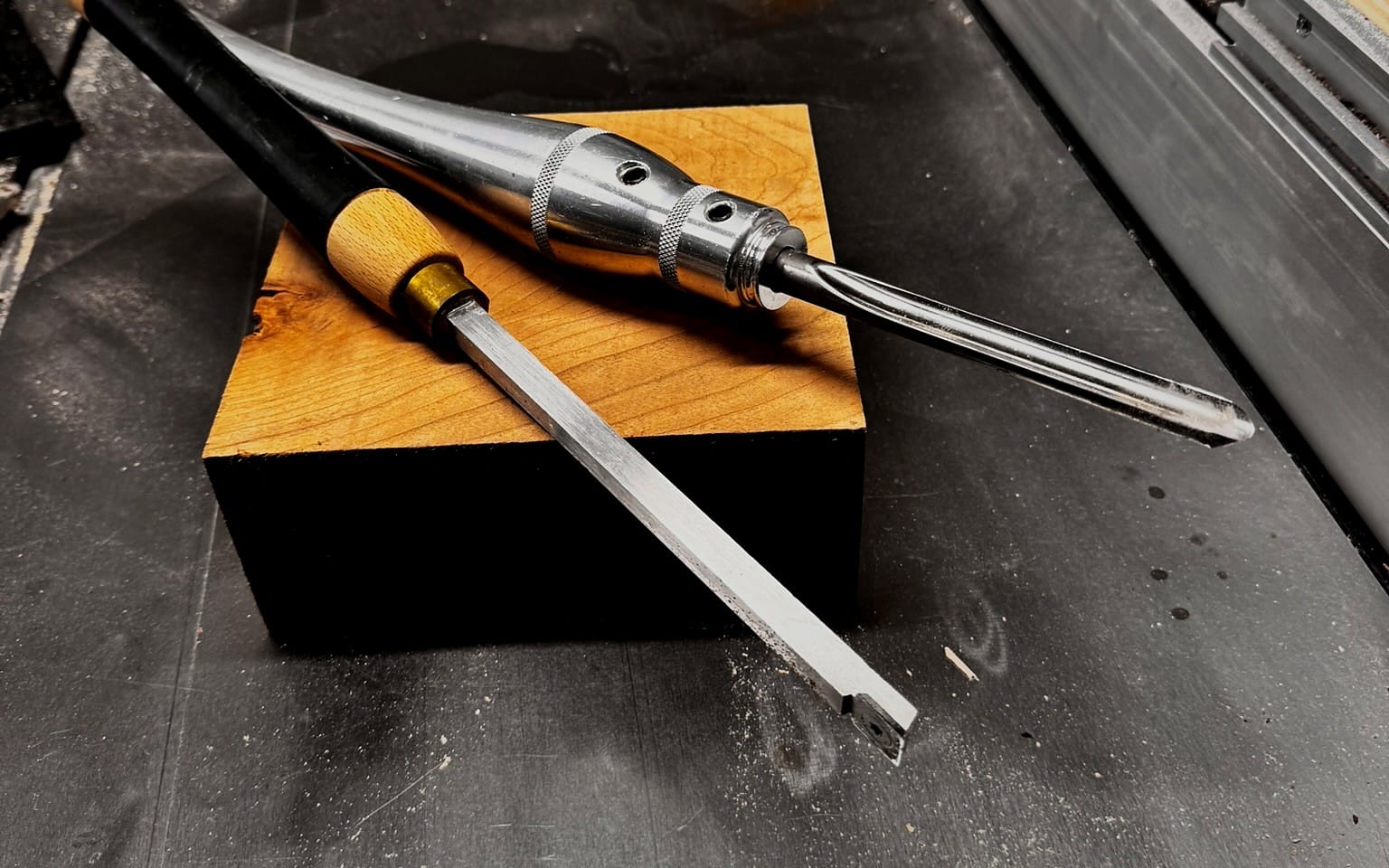
One of the features that originally drew me to Carter & Son was the interchangeable handle system.
There is something appealing about buying into a tool system slowly. Instead of filling a drawer with mismatched handles and random starter tools, the Carter & Son setup feels more deliberate. The handle has enough mass to feel stable, and the ability to swap tools makes the whole system feel like something you can build over time.
That matters because I absolutely want more of their tools.
That is not currently in the budget, but this is one of those purchases that made me look at the rest of the catalog and think, “Yes, I could see myself eventually owning a set of these.” Carter & Son sells spindle-oriented tools and sets that pair roughing gouges, skews, spindle gouges, bedans, handles, and adapters into a larger system.
I do not need that full setup today. But I understand the appeal now.
A good tool can do that. It can make the rest of the system feel less like an upsell and more like a future direction.
If I had to find an issue...
My only real complaint is barely a complaint: the aluminum handle gets cold in an unheated shop in the winter.
That is the tradeoff for the metal handle. It feels solid and durable, but on a cold day it reminds you that you are, in fact, holding aluminum. I would not change the tool because of it, but it is the kind of real-world shop detail worth mentioning.
If you work in a heated shop, you may never think about it. If you work in a New England garage in January, you will.
What I still need to learn
I am still growing into this tool.
That is probably the most honest way to say it. I am not pretending this is a definitive comparison against every premium spindle gouge on the market, and I am not claiming to have mastered traditional turning technique. I still need a better sharpening rhythm, more practice with bevel-riding cuts, and more time using traditional tools as my first choice rather than my refinement step.
But that is also why I like this gouge.
It feels like a tool with a higher ceiling than my current skill level. That can be intimidating, but it is also motivating. Some tools make you feel like you bought a solution. This one makes me feel like I bought an invitation to improve.
That is a very different thing.
Who it is for
The Carter & Son 1/2" Spindle Gouge makes sense for someone who already knows they enjoy turning and wants to move beyond the easiest entry-point tools.
It is especially appealing if you:
- started with carbide tools and want to learn more traditional turning
- enjoy spindle work, ornaments, handles, wands, or small decorative objects
- like tools that feel premium without being absurdly extravagant
- want to build a turning setup slowly around interchangeable handles
- appreciate tools that reward skill instead of replacing it
It is probably not the first tool I would recommend to someone who has never touched a lathe and is not sure they will enjoy turning. For that person, a simple carbide tool may be a friendlier start.
But for the turner who has already been hooked and wants to take the next step, this is exactly the kind of tool that makes sense.
Verdict
The Carter & Son 1/2" Spindle Gouge with a 12" handle feels like a tool for the moment when turning stops being just a fun shop activity and starts becoming a craft you want to understand.
It is sharp, solid, beautifully weighted, and useful in exactly the stage of a project where the shape begins to matter. For me, it represented a move away from disposable starter-tool thinking and toward a more intentional turning setup.
I still have plenty to learn, but that may be the best compliment I can give it.
This is not a shortcut tool.
It is a tool that makes me want to get better.
Product notes
- Tool tested: Carter & Son Toolworks 1/2" Spindle Gouge with 12" aluminum handle
- Purchased: September 2021
- Best for: spindle turning, ornaments, handles, wands, small decorative forms, and detail work
- Not ideal for: someone who has never turned before and wants the lowest-friction starting point
- Main strength: edge retention, balance, and control during refinement cuts
- Small drawback: aluminum handle can feel cold in an unheated winter shop